How to Choose a Fine-Art Landscape Print
A practical guide to choosing a fine-art landscape print — image, size, material, edition, room placement, and what makes a print worth keeping.
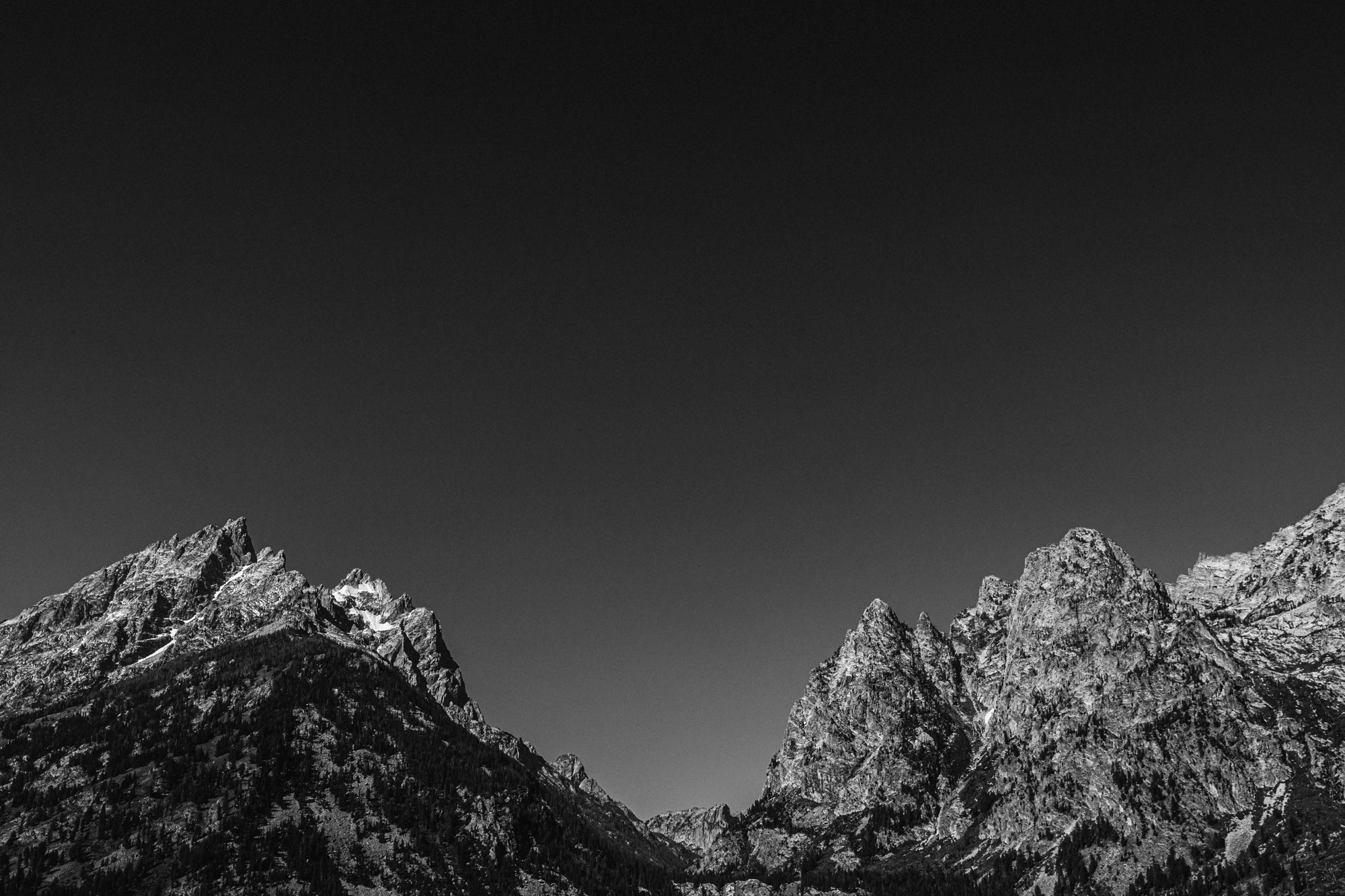
Buying a print is different from buying a poster, a decoration, or an image you scroll past.
A print has to live with you.
It has to hold up in morning light, at night, from across the room, and up close. It has to feel right on a wall when you are not thinking about it. It has to become part of the room without turning into visual noise.
That is why I think the best place to start is simple:
Choose an image you want to keep looking at.
Not just something that matches a couch. Not just something that fills an empty wall. Not just something that seems impressive for a few seconds.
A good landscape print should give the room somewhere to go. It can make a space feel quieter, larger, more grounded, or more personal. Mountains, rivers, canyons, forests, coastlines, and open desert all carry a different kind of weight. Some photographs remind you of a place you have been. Some make you want to go there. Some simply slow the room down.
That is usually what I want from a print. Not noise. Not novelty. Something worth returning to.
Start with the image
Before thinking about size, frame, paper, or price, start with the photograph itself.
Ask a few simple questions:
- Would I want to see this every day?
- Does it remind me of somewhere I care about?
- Does it make the room feel more like the kind of place I want to live in?
- Would I still like it in a year?
- Would I still like it in ten?
A good print does not need to be loud. In fact, most of the best ones are not. They hold attention in a slower way. You may notice one thing the first week and something else months later.
That is especially true with landscape photography. A canyon wall, a river bend, a mountain ridge, or a line of trees can change depending on the light in your room and the time of day.
The print becomes part of the space.
A screen image is temporary by default. It is surrounded by other images, notifications, tabs, messages, and motion. A print has a different job. It stays. It becomes part of the room’s rhythm.
That makes the choice feel more important.
Think about the room
A print is not only an image. It is an object in a room.
That means the same photograph can feel very different depending on where it hangs.
A quiet black-and-white canyon image may work well in a bedroom, office, hallway, reading corner, or entryway. A larger mountain image may work better in a living room or above a console. A smaller print may be better somewhere more personal, like a desk, shelf, or narrow wall.
Before buying, look at the wall and ask:
- Is this a quiet space or a busy space?
- Will the print be viewed from close up or across the room?
- Does the room need one strong piece or a smaller, quieter one?
- Will this be framed alone or grouped with other work?
- Does the print need to carry the wall, or simply add something to it?
The best print is not always the biggest print. It is the one that fits the room and gives something back.
A print above a sofa has a different job than a print in a hallway. A print in an office has a different job than a print in a bedroom. Some images need space. Some work better when they are found slowly.
The room matters.
Size changes the experience
Size changes the way a photograph works.
A small print invites you in. You have to come close. It feels personal. It can work well in a study, hallway, bedroom, shelf, or smaller wall.
A large print changes the room. It becomes part of the architecture. It can hold a wall by itself and create a stronger sense of place.
For landscape photographs, size also changes the way you experience depth. A larger print can make a canyon, mountain, or river feel more immersive. A smaller print can feel more intimate and object-like.
A good rule:
Small prints are for close looking. Large prints are for living with from across the room.
If you are unsure, use painter’s tape on the wall and mark out the size. Live with the outline for a day. Sit with it. Walk past it. Look at it from where you normally stand or sit.
You will know pretty quickly if the scale feels right.
One thing people often underestimate: the wall makes artwork feel smaller. A print that feels large in your hands can feel modest once it is framed and placed on a wall. This is especially true in open rooms, above furniture, or in spaces with high ceilings.
When in doubt, measure.
Consider the frame and mat
The print size is not always the final framed size.
A 16 × 20 inch print may become a much larger object once you include a mat and frame. That can be a good thing. A generous mat can give the image breathing room and make the final piece feel more finished.
For black-and-white landscape prints, simple framing usually works best.
A few safe directions:
- Thin black frame
- Natural wood frame
- White or warm white mat
- Simple gallery frame
- No overly decorative frame
The frame should support the photograph, not compete with it.
If the print is quiet, let it stay quiet. If the photograph has strong contrast, a simple frame can help hold it. If the image has a lot of open tone, a mat can give it space.
Framing is not just decoration. It changes the way the print is experienced.
Material matters
The paper or material matters because it changes how the image feels.
For black-and-white landscape photographs, matte fine-art paper is often a natural fit. It tends to feel quiet, tactile, and less reflective. It lets the tones do the work without adding too much shine.
Other materials can feel more modern, polished, or object-like. Some prints look beautiful with a deeper surface or more dimensional presentation. But not every photograph needs that.
The material should serve the image.
For a quiet canyon photograph, a soft matte paper may feel right. For a sharper mountain image with deep blacks, a different surface might carry the contrast better. For a large collector piece, the finishing method may become part of the presence of the work.
The best material is not always the most expensive one. It is the one that makes the photograph feel right.
For buyers, the main thing is clarity. A print page should tell you what the material is, what size you are buying, whether the print is signed, and how it will ship.
If those details are not clear, ask.
Understand editions
A limited edition means only a set number of prints will be made in that edition. For example, an edition of 25 means there will be 25 prints in that size or format.
Limited editions are usually signed and numbered. That might look like:
3 / 25
That means it is the third print in an edition of twenty-five.
A limited edition does not automatically make a photograph better. But it does make the print more finite. It gives the work a boundary.
For buyers, edition details are useful because they tell you what you are buying:
- How many will exist?
- Is it signed?
- Is it numbered?
- What size is included in the edition?
- Will the image be printed again in another format?
- Is the edition tied to a specific paper, size, or release?
Those details should be clear before you buy. If you want a deeper read on this, see What Limited Edition Means.
Buy the image, not just the scarcity
Limited editions matter, but the image matters more.
A print should not only be purchased because it is limited. It should be something you actually want to live with.
The scarcity can add meaning. The signature can add connection. The material can add quality. But the photograph still has to carry the piece.
That is the part you will see every day.
A limited edition of an image you do not care about will not become more meaningful just because there are fewer of them. A good photograph, printed well and chosen for the right space, will keep working long after the novelty of the purchase is gone.
Start with the image.
A simple way to choose
If you are choosing a print, I would think about it in this order:
1. Image
Do you want to keep looking at it?
2. Place
Where will it live?
3. Size
Will it feel right on that wall?
4. Material
Does the finish fit the photograph?
5. Edition
Do the details feel clear and intentional?
That order matters. Start with the image. Everything else supports it.
Common mistakes
Buying too small
This is probably the most common mistake. People worry about going too big, but a print often needs more presence once it is on the wall.
Choosing only by room color
A print should work in the room, but it does not need to match every color. Black-and-white prints are especially flexible because they are less tied to a palette.
Ignoring framing
A print and a framed piece are not the same size visually. Plan for the final object.
Buying only because it is limited
Edition matters, but it is not the main reason to buy. Buy the image first.
Not checking shipping and return details
Especially with made-to-order prints, understand the shipping timeline, packaging, and damage policy.
The best print is the one you return to
A good print should be easy to live with and hard to ignore completely.
It does not need to dominate the room. It does not need to explain itself. It should simply keep offering something back.
That might be a line of light on a canyon wall. A mountain ridge against a dark sky. A quiet river. A place you remember. A place you want to remember.
That is what makes a print worth keeping.